
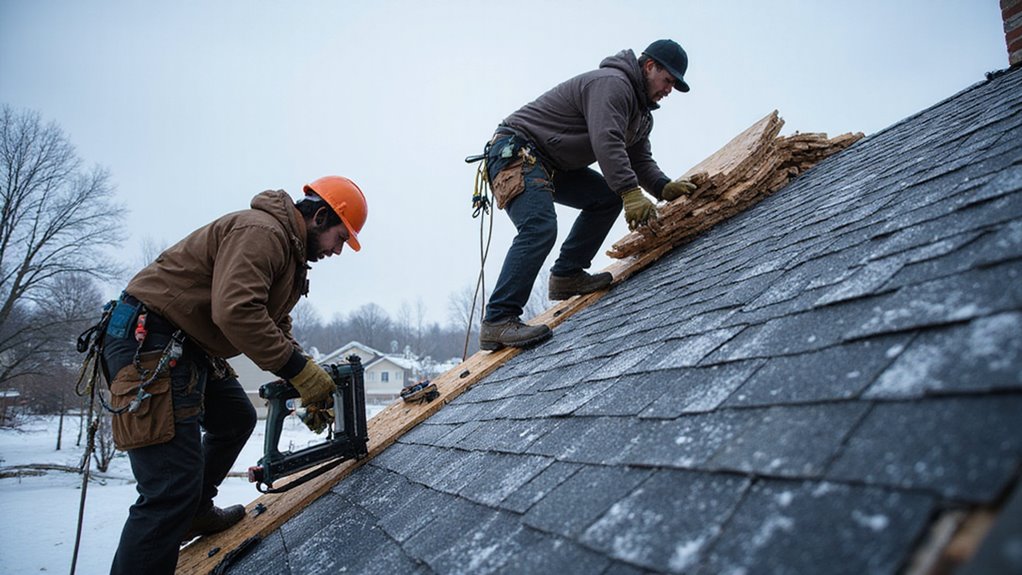
Braving icy winds and snow-covered surfaces, winter roofing installations present unique challenges for homeowners and contractors. Many property owners face urgent roof repairs during cold months but worry about quality and safety concerns. The harsh weather conditions and freezing temperatures can complicate the installation process, leading to potential mistakes and failures. Professional installation with proper precautions offers a reliable solution for winter roofing needs.
Winter roofing installations remain possible when temperatures stay above 40°F for asphalt shingles and 45°F for adhesives. Successful projects require careful planning, material acclimation, and specialized techniques like manual sealing in colder conditions. Extra time, safety measures, and additional costs typically accompany winter installations.
This guide explores every essential aspect of installing a roof during the cold winter months.
Key Takeaways
- Winter roof installation is possible when daytime temperatures stay above 40°F for asphalt shingles and 45°F for adhesives and EPDM materials.
- Winter projects offer 10-20% cost savings due to lower contractor demand, though specialized equipment may increase costs by 10-25%.
- Installation takes 20-50% longer in winter, requiring 3-5 consecutive days above 40°F with extra buffer days for weather delays.
- Materials must acclimate at 45-70°F for 24-48 hours beforehand, and manual sealing is required below 40°F for proper adhesion.
- Work stops during ice, snow, sustained 20 mph winds, or when temperatures drop below manufacturer guidelines to ensure safety and quality.
Can You Install a Roof in the Winter?
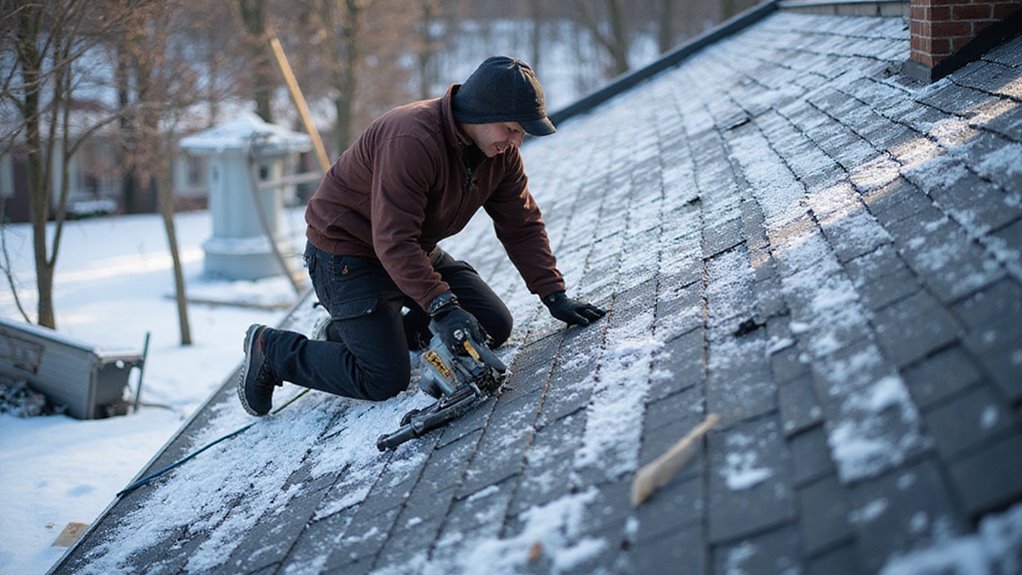
Yes, you can install a roof during winter months. Asphalt shingles require daytime temperatures above 40°F for proper installation. Adhesives need at least 45°F to bond correctly. Cold weather makes roofing materials more fragile and workdays shorter.
Moreover, winter installations offer scheduling flexibility and potential cost savings. Safety remains crucial during cold-weather roof work. Licensed contractors must follow state building codes and OSHA safety guidelines.
To ensure success, materials need time to adjust to outdoor temperatures before installation. Always verify your warranty coverage for winter installations.
Is Winter Roofing Installation Possible?
Yes, winter roofing installation is possible with proper preparations and precautions. Professional roofers can work safely when temperatures stay above 40°F for asphalt shingles. Cold weather requires specific adaptations to ensure quality results. Contractors must store materials in heated areas and use special cold-weather adhesives.
As a result of these measures, winter installations can match summer projects in durability and performance. Skilled teams monitor weather forecasts and follow strict safety protocols. Each installation must comply with OSHA fall protection standards and manufacturer guidelines for cold conditions.
What Weather Conditions Affect Winter Roof Installation?

Weather conditions directly determine whether you can safely and effectively install a roof during Mississippi’s winter months. Temperature thresholds vary by material—asphalt shingles require daytime temperatures above 40°F, while EPDM and adhesives need at least 45°F for proper bonding and sealing. Beyond temperature, you must account for snow, ice, wind, and rain, all of which create safety hazards and can compromise installation quality if work proceeds without proper precautions.
Temperature Thresholds for Different Roofing Materials
Different roofing materials require specific minimum temperatures for safe installation. Asphalt shingles need temperatures above 40°F for proper adhesion. EPDM rubber and roofing adhesives require a minimum of 45°F to bond effectively. Metal roofing works well in cold conditions without temperature concerns.
In addition, materials must adjust to indoor temperatures before installation begins. Winter temperatures in Mississippi typically range from 50-60°F, which meets most installation requirements. Always check manufacturer guidelines for specific temperature limits.
Impact of Snow and Ice on Installation
Snow and ice significantly impede proper installation of building materials. Cold weather extends installation time by 25-40% due to necessary safety preparations and surface treatments. Frozen surfaces prevent proper adhesion and compromise material integrity.
Proper moisture removal and surface preparation become essential before any installation work. Installation temperatures must stay above 40°F (4°C) for most building materials to perform correctly. Safety protocols require additional time for ice removal and slip prevention measures.
Moreover, frost can damage newly installed materials and affect long-term durability. Contractors should add 2-3 extra days to project timelines during winter conditions.
Wind Considerations During Cold Months
Strong winds create dangerous conditions for winter roofing work in Mississippi. Workers must stop all roofing activities when sustained winds reach 20 mph or gusts hit 30 mph. These strict safety rules protect crews from falls and flying materials.
Safety comes first in windy conditions. Secure tools and materials properly to prevent dangerous projectiles. Place temporary tarps over exposed areas during installation breaks. Most importantly, check weather forecasts regularly before starting any roofing project.
What Are the Pros and Cons of Winter Roof Installation?
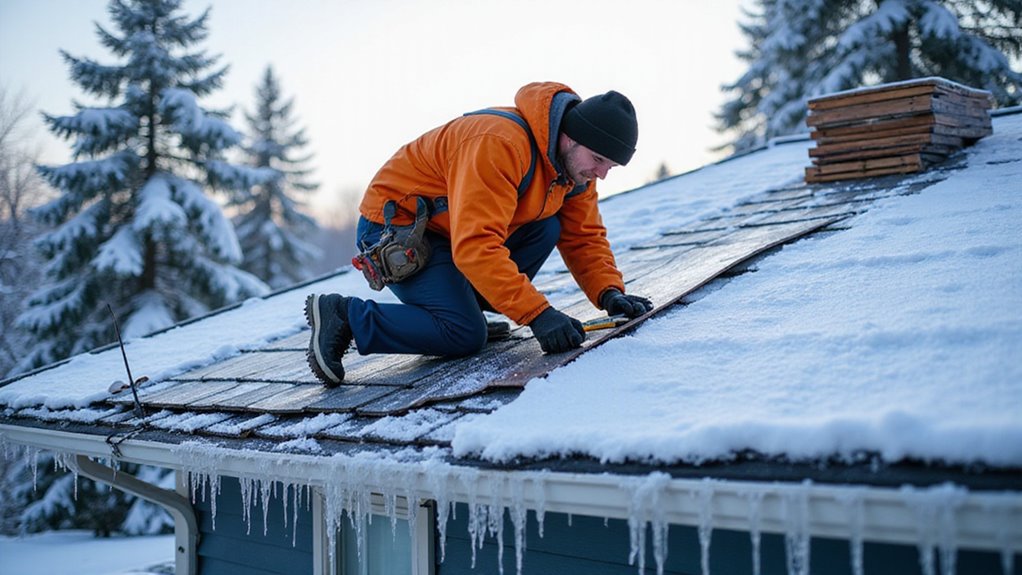
Winter roof installation offers distinct advantages and challenges you’ll need to weigh carefully before proceeding. You can often secure faster scheduling and lower labor costs due to reduced contractor demand, but cold temperatures complicate material handling and may require additional safety measures and project time. Completing your roof replacement before peak heating season maximizes energy efficiency gains, though you must verify that manufacturers’ temperature guidelines and warranty terms permit winter installation.
Lower Contractor Demand and Potential Cost Savings
Winter contractor demand drops significantly, leading to cost savings of 10-20% on roofing projects. Roofers have fewer jobs during cold months. Most contractors offer discounts between November and February to maintain steady work. The reduced workload allows faster scheduling and more attention to each project.
Professional crews can dedicate full resources to your installation without juggling multiple jobs. Licensed roofers must still follow material handling guidelines and safety regulations in winter conditions. Proper planning ensures quality results despite the season.
Successful winter installations require proper material storage and temperature monitoring. Smart homeowners take advantage of these seasonal cost benefits. The right preparation makes cold-weather roofing both practical and economical.
Challenges with Material Handling in Cold Weather
Cold weather creates three main material handling problems that require special care during construction work. Materials like asphalt shingles crack easily in temperatures below 40°F. Workers must store these items in warm spaces before use. Roofing adhesives need a minimum temperature of 45°F to work effectively.
A proper plan addresses these challenges head-on. Teams should check surface temperatures regularly throughout the day. OSHA safety rules require clear, ice-free surfaces before any work begins. Hand-sealing methods become necessary when automatic seals fail in cold conditions.
Energy Efficiency Benefits Before the Heating Season
A well-maintained roof delivers significant energy savings before winter arrives. Proper insulation and ventilation help reduce heat loss through the roof structure. The right upgrades create a more stable indoor environment.
Homeowners can expect 10-15% lower heating bills with proper roof insulation and sealing. Quality roof maintenance prevents warm air from escaping through gaps and cracks. Professional contractors identify and fix insulation weak spots during inspections.
Better roof performance leads to consistent indoor temperatures throughout cold months. Modern roofing materials provide superior protection against winter weather. These improvements make homes more comfortable and energy-efficient.
How to Properly Install a Roof in Winter Conditions?
Installing a roof in winter conditions requires you to follow specific protocols that account for temperature, material behavior, and jobsite hazards. You’ll need to acclimate materials properly, modify your installation methods to meet manufacturer specifications in cold weather, and implement improved safety measures that comply with OSHA fall protection standards. Successful winter roofing also depends on your ability to schedule work during favorable weather windows and maintain code-compliant practices throughout the project.
Proper Material Storage and Acclimation
Construction materials need specific storage conditions to maintain quality and performance. Store all roofing materials at temperatures between 70°F and 80°F before installation. Allow a minimum 24-hour acclimation period in controlled conditions.
Good storage prevents damage and ensures reliable installation results. Keep shingles flat under protective covers. Place adhesives in temperature-stable areas. Shield rubber membranes from water exposure.
Furthermore, well-acclimated materials create stronger bonds and more durable roofs. Materials stored correctly must meet local building codes and manufacturer guidelines. This careful preparation leads to better project outcomes.
Modified Installation Techniques for Cold Weather
Cold weather demands special roofing installation methods to ensure proper sealing and durability. Manual sealing becomes necessary when temperatures drop below 40°F because shingles won’t bond naturally. Each shingle tab requires roofing cement or adhesive strips for immediate adhesion. Contractors must check every shingle course carefully before proceeding.
As a practical measure, materials should stay warm indoors before use. Fasteners need deeper penetration in cold conditions to offset brittle roofing materials. Simple preparation steps prevent cracking and ensure lasting protection. These adjustments help maintain quality installation standards during winter months.
Safety Precautions for Winter Roofing Work
Safety equipment and clear procedures protect workers during winter roofing jobs. Workers must wear boots with deep treads to prevent slips on icy surfaces. Teams need at least two extra crew members for stability in freezing conditions. Regular checks help identify and remove dangerous frost buildup before work starts.
All roofing work stops when temperatures fall below manufacturer guidelines or ice forms. Proper lighting helps teams work efficiently during shorter winter days. Simple safety steps prevent accidents and ensure quality installations that meet building codes.
Scheduling Around Weather Windows
Monitor weather forecasts to schedule roof work during stable weather periods. Roof installation requires 3 to 5 consecutive days with temperatures above 40°F. Check local radar for precipitation and wind conditions before scheduling work. Your contractor should track these weather patterns carefully.
Early morning starts work best after frost clears. Smart scheduling includes extra buffer days for weather delays. Clear communication about weather-dependent timing helps protect your investment.
Furthermore, crews must remain on standby to start work immediately when conditions become favorable. This flexibility ensures proper installation that meets building codes.
Which Roofing Materials Work Best in Winter?
When you’re planning a winter roof installation in Mississippi, material selection directly impacts your project’s success and longevity. Asphalt shingles require specific temperature thresholds and handling procedures, while metal roofing offers distinct cold-weather advantages that can streamline installation timelines. For flat or low-slope applications, you’ll need to evaluate EPDM, TPO, and modified bitumen systems based on their adhesive requirements and temperature limitations to ensure code-compliant, watertight results.
Asphalt Shingles in Cold Weather
Cold weather significantly affects asphalt shingle installation and performance. These shingles become brittle and can crack when temperatures fall below 40°F. Proper precautions ensure successful winter installation.
Essential cold-weather installation requirements include storing shingles in heated spaces for 24 hours before use. Manual sealing with roofing cement replaces the ineffective self-seal adhesive strips in freezing conditions. Contractors should work during peak daytime warmth.
Furthermore, warranty validation remains crucial for cold-weather installations. Professional installers must review manufacturer guidelines carefully. This step protects your investment and maintains long-term roof durability.
Metal Roofing Winter Installation Benefits
Metal roofs can be safely installed during winter months in Mississippi. Metal panels maintain their durability and strength even in cold temperatures. The installation process remains reliable since metal resists brittleness in winter weather.
Metal roofing systems require fewer temperature-sensitive adhesives than traditional shingles. Mechanical fasteners work effectively regardless of the cold. This advantage allows crews to complete installations during brief breaks between winter storms.
Most importantly, metal roofing offers year-round protection and peace of mind. These systems meet all Mississippi building codes and OSHA safety requirements. Professional installation ensures lasting performance in any season.
Flat Roofing Options for Cold Weather
The best flat roofing materials for cold weather are EPDM rubber, TPO, and modified bitumen. EPDM rubber requires temperatures above 45°F for proper installation. TPO membranes need special heat-welding methods in cold conditions. Modified bitumen works through torch-down application that adapts to temperature changes.
Each material must meet specific temperature requirements for successful installation. Professional roofers should check manufacturer guidelines before winter projects begin. Furthermore, proper material storage and handling become essential in cold conditions.
What Additional Precautions Should Homeowners Take?
You’ll need to plan for longer project timelines during winter installations, as shorter daylight hours, frost delays, and mandatory safety protocols can extend completion by several days beyond summer schedules. Budget for additional costs including material acclimation time, powerful temporary weatherproofing measures, and possible premium rates for contractors willing to work in cold conditions. Review your contract carefully to confirm warranty coverage applies to winter installations and verify that your contractor carries adequate insurance for cold-weather roofing operations.
Winter Roof Installation Timeline Expectations
Winter roof installations in Mississippi require extra time for completion compared to other seasons. A typical winter roofing project takes 20 to 50 percent longer than warm weather installations. Shingles must acclimate at room temperature for 24 to 48 hours before use. Cold weather, rain, and frost create unavoidable work delays.
Building inspectors often have limited winter schedules, which affects project timelines. Regular safety checks become necessary during winter installations. Your contractor will need to adjust plans based on weather conditions. Moreover, shorter winter daylight hours reduce available work time.
Additional Costs to Consider
Winter roofing in Mississippi costs more than standard installations. Projects typically increase 10-25% due to cold weather requirements. Extra expenses come from specialized storage, climate-controlled vehicles, and cold-weather adhesives.
Safety equipment adds to the total price in winter conditions. Contractors need ice-melting systems and additional fall protection gear. Moreover, shorter daylight hours often lead to overtime wages.
Beyond these factors, specialized winter sealants raise material costs. Your contractor must maintain proper installation standards despite challenging weather. As a result, proper winter preparation protects both workers and your investment.
Ready for a Winter Roof Replacement? Contact BSL Roofing Today!
Winter is a suitable time for roof replacement in Mississippi with proper planning and expertise. Professional roofing crews can safely complete winter installations by following strict protocols. Temperatures above 40°F allow proper shingle sealing and material adhesion. Your new roof needs careful material handling and precise installation methods during cold weather.
BSL Roofing uses specialized winter techniques to protect your investment. Our team monitors weather forecasts to schedule work on ideal days. As a result, your home stays protected while meeting all building codes and warranty requirements. Licensed contractors complete most residential roof replacements within 2-3 days.