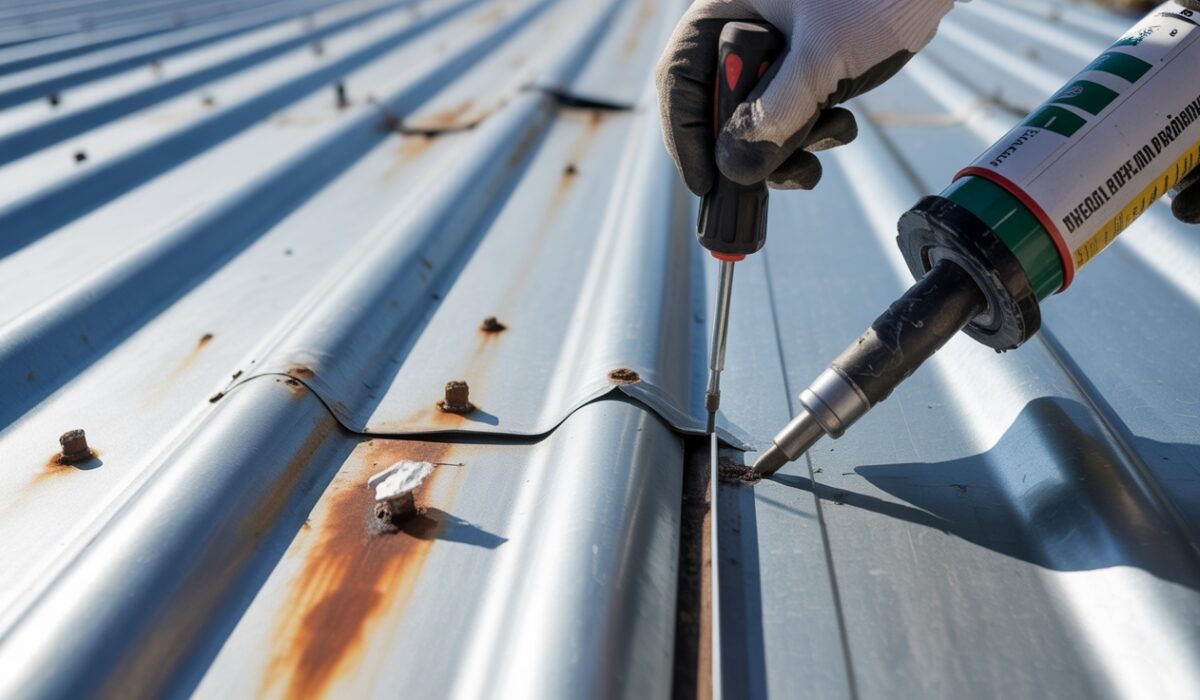
Metal roofs crack, leak, and corrode over time, even in coastal climates like Gulfport, Mississippi. Property owners face urgent repairs after storms, rust, or simple wear and tear. These issues demand immediate attention to prevent water damage and structural problems.
Metal roof repair involves identifying damage, cleaning affected areas, applying proper sealants or patches, and replacing compromised panels or fasteners when necessary. The process varies depending on whether you’re dealing with loose screws, punctures, or full panel deterioration.
In this blog post, you’ll learn practical methods, safety protocols, required tools, and when to call professionals for metal roof maintenance and roof leak fix solutions.
Key Takeaways
• Metal roof repair includes tightening fasteners, sealing joints, patching holes, fixing flashing, and replacing damaged panels
• Proper surface preparation and sealant selection are critical for long-lasting repairs
• Compliance with OSHA regulations and PPE requirements protect workers from fall hazards
• Roof leak fix requires locating the source, cleaning, scuffing, applying sealant, and allowing proper cure time
• Professional roof repair services are recommended for extensive damage, especially in hurricane-prone areas
• DIY metal roof repair suits minor issues, while structural roof support repair needs licensed contractors
• Regular metal roof inspection prevents costly emergency roof repair situations
What Are the Common Methods for Repairing a Metal Roof?
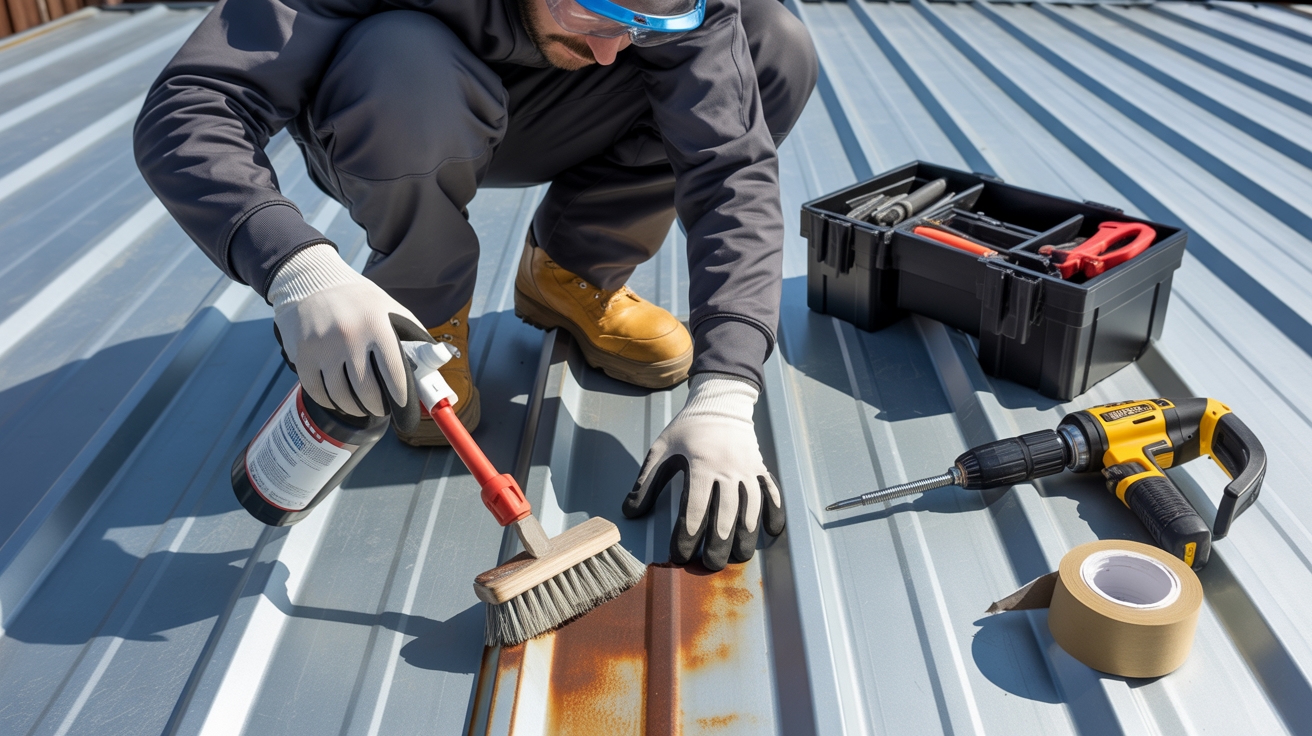
Metal roof repair methods address specific damage types found during routine metal roof inspection. Property owners can choose from several approaches based on the severity and location of problems. Each technique targets common issues like loose connections, water intrusion, or panel degradation.
Tightening or Replacing Fasteners
Roof fastener replacement fixes one of the most frequent causes of leaks in damaged metal roofing. Screws loosen over time due to metal roof expansion and thermal cycling. You should inspect all metal roof screws annually, especially after severe weather events.
Proper torque matters when reinstalling fasteners to prevent over-tightening. Workers must use washers compatible with your roof material to maintain weatherproofing roof standards. This simple step prevents future roof damage from wind uplift and water penetration.
Sealing Leaks and Joints
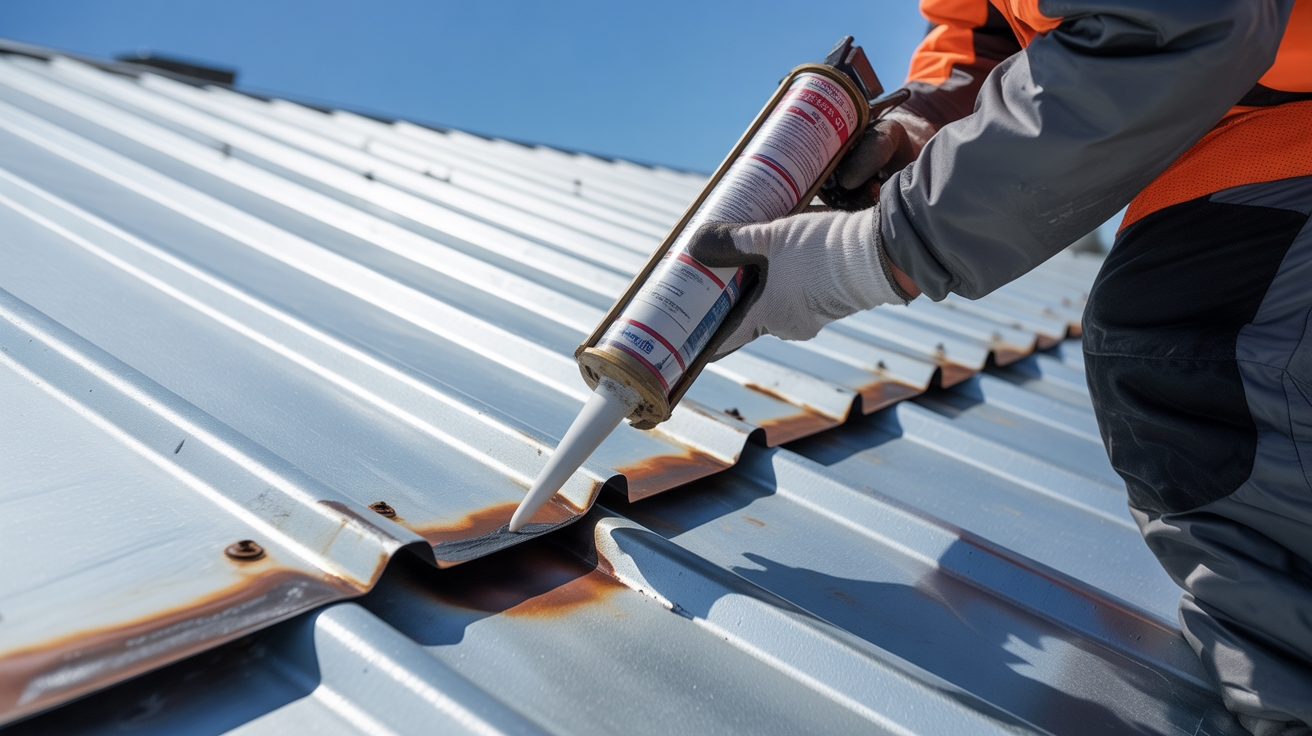
Roof seam repair stops water intrusion at panel overlaps and connections. Metal roof sealant applications require clean, dry surfaces for proper adhesion. You must select products that match your roof material compatibility requirements.
Professional roof repair services apply sealants along vulnerable areas including roof valleys and panel edges. The sealant must remain flexible to accommodate metal roof expansion without cracking. This method provides immediate protection while you plan more extensive repairs.
Patching Small Holes
Patching metal roof techniques address fixing roof punctures from fallen branches or installation errors. Small holes allow significant roof water damage if left untreated. You need compatible patching materials that bond securely to your existing panels.
Metal patches work better than generic repair tape for long-term roof protection. Workers cut patches slightly larger than the damaged area to ensure complete coverage. Proper roof edge repair techniques prevent moisture from migrating under the patch material.
Repairing Flashing
Metal roof flashing around chimneys, vents, and walls requires special attention during repairs. Damaged flashing causes persistent leaks that appear far from the actual problem source. You should inspect all flashing connections during your metal roof inspection routine.
Roof ridge cap repair often involves flashing replacement to restore waterproof barriers. Professionals ensure proper overlap and secure fastening to prevent wind damage. Gutter connection repair also depends on intact flashing to direct water away from the structure.
Applying a Protective Roof Coating
Roof coating application provides rust prevention and metal roof deterioration resistance. Reflective coatings improve roof heat reflection, reducing cooling costs in hot climates. You gain both protection and energy efficiency from this roof restoration method.
Coatings seal minor imperfections while extending overall roof lifespan. State and local codes may require specific coating types for environmental compliance. The process requires thorough metal roof cleaning methods before application to ensure proper bonding.
Replacing Damaged Panels
Roof panel replacement becomes necessary when corrosion or damage exceeds repair capabilities. Metal roof corrosion weakens structural integrity and creates safety hazards. You must assess whether individual panel replacement or complete roof restoration makes financial sense.
Standing seam roof repair may allow panel removal without disturbing adjacent sections. Metal shingle replacement follows similar principles but requires matching existing roof panel alignment. Professionals consider roof pitch considerations and ensure new panels integrate with existing roof underlayment.
What Are the General Steps for Patching or Sealing Metal Roofs?
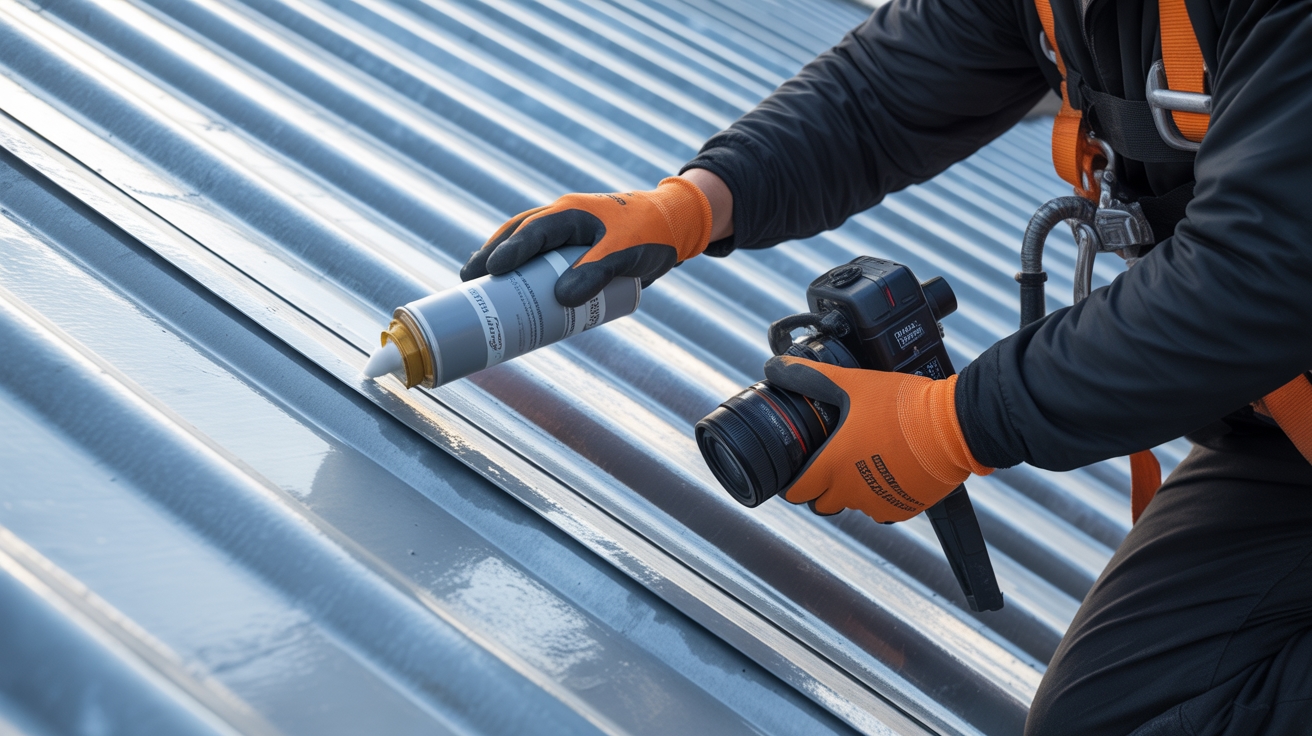
The roof leak fix process follows a systematic approach to ensure lasting repairs. Property owners must complete each step properly for metal roof maintenance success. Skipping stages compromises repair quality and leads to recurring problems.
Locate the Leak
You must identify the exact source of water intrusion before starting repairs. Water travels along panels before dripping inside, making the visible damage location misleading. Inspectors look for rust stains, fastener discoloration, and wet insulation during metal roof inspection.
Roof pitch considerations affect how water flows and where it penetrates. Professionals sometimes use water tests to confirm leak locations on complex roofs. Accurate identification prevents wasted effort on areas that aren’t actually damaged.
Clean the Area
Surface preparation determines whether your patching metal roof efforts will succeed. Dirt, rust, and old sealant prevent new materials from bonding properly. You need wire brushes, solvents, or pressure washers depending on contamination type.
Metal roof cleaning methods must remove all loose material without damaging sound metal. Workers should extend cleaning several inches beyond the visible damage area. Sealants, primers, and coatings used in repairs must meet VOC and environmental standards established by Mississippi Department of Environmental Quality.
Scuff the Surface
Smooth metal surfaces need texture for metal roof sealant adhesion. You should use sandpaper or abrasive pads to create a roughened profile. This step increases surface area and provides mechanical grip for repair materials.
Galvanized roofing repair requires careful scuffing to avoid removing protective zinc layers. Workers balance adequate surface preparation with preserving underlying roof material compatibility. Proper scuffing ensures patches stay secure through metal roof expansion cycles.
Apply Sealant/Patch
Metal roof sealant application requires following manufacturer instructions for temperature and thickness. You must apply materials evenly without gaps or excessive buildup. Professionals use putty knives, caulking guns, or rollers depending on product type.
Patching metal roof with metal patches provides stronger repairs than sealant alone. Workers center patches over damage and press firmly to eliminate air bubbles. Roof coating application over patches adds an extra protection layer for long-term roof protection.
Secure the Repair
Mechanical fastening strengthens patches on areas subject to wind stress. You should use appropriate metal roof screws with sealing washers for weatherproofing roof integrity. Fasteners must penetrate into solid substrate, not just through damaged layers.
Roof panel alignment remains critical when securing larger patches or replacement sections. Workers ensure repairs don’t create raised edges that catch wind or trap debris. Proper securing prevents the repair itself from becoming a new leak source.
Allow to Cure
Sealants and coatings need adequate drying time before exposure to weather. You must protect fresh repairs from rain during the curing period specified by manufacturers. Temperature and humidity affect cure times, especially in coastal Mississippi climates.
Premature exposure to water or stress causes repair failure and wasted materials. Emergency weather protocols require roofers to halt repairs during electrical storms or extreme heat, given the region’s climate risks. Patience during curing ensures your roof restoration efforts provide lasting results.
What Safety Precautions Should Be Taken When Repairing Metal Roofs?
Safety must be the first priority during any metal roof repair project. Statistical data from the Bureau of Labor Statistics shows roofing is among the highest-risk construction jobs for falls and injuries nationally, with increased risks in southern coastal areas due to weather volatility. Property owners and contractors face serious liability for accidents caused by inadequate precautions.
Prioritize Safety When Working on a Roof
Every roof access requires fall protection planning and hazard assessment. You should never work alone on elevated surfaces, especially on sloped or wet metal panels. Weather conditions dramatically affect safety, with metal surfaces becoming dangerously slippery when damp.
OSHA Standard 1926.503 mandates training for identifying fall hazards on metal roofs, and using/inspecting fall protection systems. Workers must recognize risks specific to metal roofing, including thermal expansion and reduced traction. Proper planning reduces emergency roof repair situations caused by worker injuries.
Wear Appropriate Personal Protective Equipment (PPE)
PPE, including harnesses, hard hats, gloves, and non-slip boots, is legally required on worksites for any metal roof repair on commercial or residential properties. Safety harness use prevents fatal falls during roof fastener replacement and other elevated work. You need equipment rated for your weight plus tools and materials.
Non-slip footwear designed for metal surfaces prevents dangerous slips during metal roof cleaning methods. Gloves protect hands from sharp edges encountered during metal shingle replacement and fixing roof dents. Eye protection guards against metal fragments during cutting and grinding operations.
Contact a Roofing Professional for Extensive Repairs
Complex repairs involving structural roof support repair require licensed contractor expertise. It is advised by Mississippi State University Extension and FEMA to hire licensed professionals for extensive repairs, especially when roof integrity relates to storm resilience and insurance claims in Gulfport. DIY metal roof repair suits minor maintenance, but major projects need professional skills.
State and local codes (such as Mississippi Building Code Chapter 13 for roofing) require permits for major metal roof repairs or replacement, and adherence to wind and weather standards due to Gulf Coast hurricane risk. Professional roof repair services understand these requirements and carry proper insurance. Their experience prevents costly mistakes during standing seam roof repair and roof panel replacement projects.
What Tools and Materials Are Needed for Metal Roof Repairs?
Successful repairs depend on having proper metal roofing tools and compatible materials. You need different equipment for minor patching metal roof tasks versus complete roof panel replacement projects. Quality tools make work safer and produce better results.
Basic repairs require wire brushes, putty knives, and caulking guns for metal roof sealant application. You should have drill/drivers with appropriate bits for roof fastener replacement work. Measuring tools ensure accurate cuts and proper roof panel alignment during installations.
Metal roof cleaning methods need pressure washers or chemical cleaners suitable for your roof type. Safety equipment includes ladder stabilizers, roof anchors, and fall arrest systems for safety harness use. Metal roofing tools for cutting include aviation snips, nibblers, or electric shears depending on material thickness.
Materials selection affects roof material compatibility and repair longevity. You need sealants formulated specifically for metal that accommodate metal roof expansion and contraction issues. Replacement fasteners must match existing metal roof screws in type and corrosion resistance.
Patching materials should match your existing galvanized roofing repair needs or other metal types. Roof coating application requires primers and topcoats designed for rust prevention and roof heat reflection. Proper materials prevent metal roof discoloration and ensure long-term roof protection.
How Can You Identify the Source of a Metal Roof Leak?
Leak detection requires systematic inspection starting from interior damage and working upward. You should examine attic spaces for water stains, wet insulation, and visible light penetration. These clues guide you to the general roof area needing attention.
Exterior metal roof inspection focuses on fasteners, seams, flashing, and roof valleys. Metal roof corrosion appears as rust stains or holes in advanced cases. You need to check roof ridge cap repair areas and gutter connection repair points where water concentrates.
Water doesn’t always enter where it appears inside the building. Roof pitch considerations mean leaks may originate several feet upslope from visible damage. Professionals trace water paths along roof underlayment and panel channels during diagnosis.
Testing methods include controlled water application to suspected areas while observers watch inside. You can also use infrared cameras to detect moisture trapped in roof insulation repair zones. Thorough leak identification prevents unnecessary repairs and ensures effective roof water damage correction.
When Should You Replace Versus Repair a Metal Roof Panel?
The decision between repair and roof panel replacement depends on damage extent and cost comparison. You should replace panels when metal roof corrosion has created multiple holes or weakened structural integrity. Single small punctures usually respond well to patching metal roof techniques.
Roof repair cost estimation must include labor for accessing and aligning new panels. Standing seam roof repair often allows individual panel replacement without disturbing adjacent sections. Metal shingle replacement becomes practical when damage affects multiple shingles in one area.
Age factors into replacement decisions since older roofs may have widespread metal roof deterioration. You gain little by repairing one section when surrounding areas will soon fail. Professionals assess remaining lifespan during metal roof inspection to guide replacement timing.
Post-Hurricane Katrina, Gulfport’s FEMA-funded roofing repair programs enforced strict compliance with code upgrades, debris clearance, and wind-resistant materials on metal roofs. Major damage from storms often justifies complete replacement rather than extensive patching. Insurance considerations and building code requirements may mandate replacement for storm-damaged roofs.
What Type of Sealant Works Best for Metal Roof Repairs?
Metal roof sealant selection depends on your specific roof material and environmental conditions. You need products formulated for metal that remain flexible through metal roof expansion and temperature changes. Polyurethane and silicone sealants offer excellent weatherproofing roof performance for most applications.
Butyl rubber sealants work well for roof seam repair and flashing connections. You should choose sealants with UV resistance to prevent degradation from sun exposure. Products designed for coastal environments resist salt air corrosion common in Gulfport, Mississippi locations.
Roof material compatibility matters since some sealants react poorly with specific metal types. Galvanized roofing repair requires sealants that won’t cause galvanic corrosion. You must verify compatibility before application to avoid accelerating metal roof deterioration.
Application conditions affect sealant performance, so you need products rated for expected temperatures. Sealants, primers, and coatings used in repairs must meet VOC and environmental standards established by Mississippi Department of Environmental Quality. Proper sealant choice ensures effective rust prevention and long-term roof protection.
Ready to Repair Your Metal Roof with BSL Roofing Mississippi Experts?
BSL Roofing delivers professional roof repair services throughout Mississippi’s Gulf Coast region. We are trusted roofing contractors in Mississippi with extensive experience in metal roof maintenance and roof restoration. Our team understands the unique challenges of coastal weather and metal roof expansion issues.
We serve property owners in Ocean Springs, Long Beach, Pass Christian, Biloxi and surrounding communities. Our experts handle everything from simple roof leak fix projects to complete standing seam roof repair systems. We also service the other popular areas of Gulfport, Mississippi, ensuring comprehensive coverage for your roofing needs.
You can rely on our licensed professionals for emergency roof repair and planned metal roof inspection services. Contact BSL Roofing today for a thorough assessment and roof repair cost estimation for your property. We provide solutions that protect your investment and ensure long-term roof protection against Gulf Coast weather challenges.