
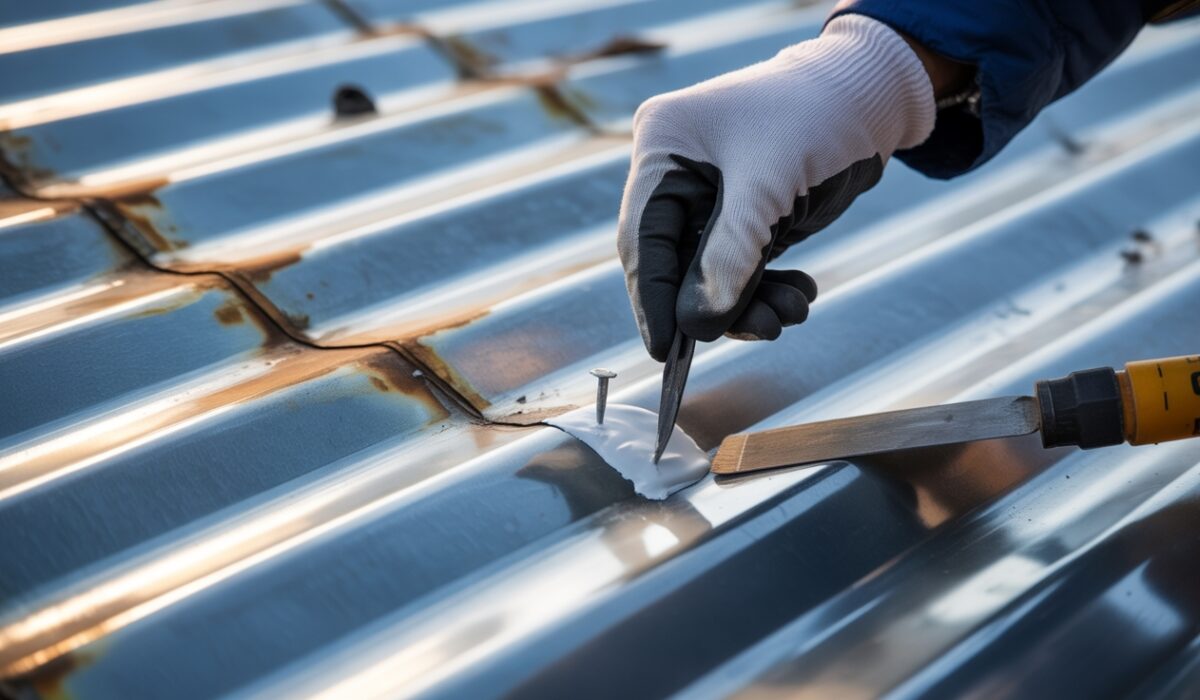
Metal roofs protect homes for decades, but nail holes can compromise their integrity. Even small punctures allow water to seep into your home and cause serious damage. Many homeowners discover leaks only after water stains appear on ceilings. Metal roof maintenance becomes critical when you spot these warning signs. The good news is that most nail hole repairs are manageable with basic tools and materials.
You can repair nail holes in metal roofs by cleaning the damaged area thoroughly and applying appropriate sealant or patching materials. Most small holes need only quality roof sealant, while larger punctures require metal patches secured with roofing screws.
In this blog post, you’ll learn the exact steps for sealing nail holes, choosing the right materials, and preventing future roof leak repair needs.
Key Takeaways
• OSHA requires use of gloves, safety glasses, and fall protection equipment for metal roof work; proper safety gear prevents serious injuries during roof repairs
• Metal roof repair success depends on thorough cleaning and rust removal before applying any sealant or patch
• Small nail holes need only quality silicone roof sealant, while holes larger than a quarter-inch require metal patches
• Polyurethane and butyl-based sealants provide superior weatherproofing roof protection in high-humidity and coastal climates
• Professional roof repair becomes necessary when damage is extensive, safety concerns exist, or insurance claims require code-compliant work
• Regular roof inspection and preventive maintenance reduce emergency roof repair costs and extend metal roof lifespan
• Metal roof fasteners must be rated for your climate conditions to ensure long-lasting roof repair results
What Tools and Materials Are Needed for Metal Roof Repair?
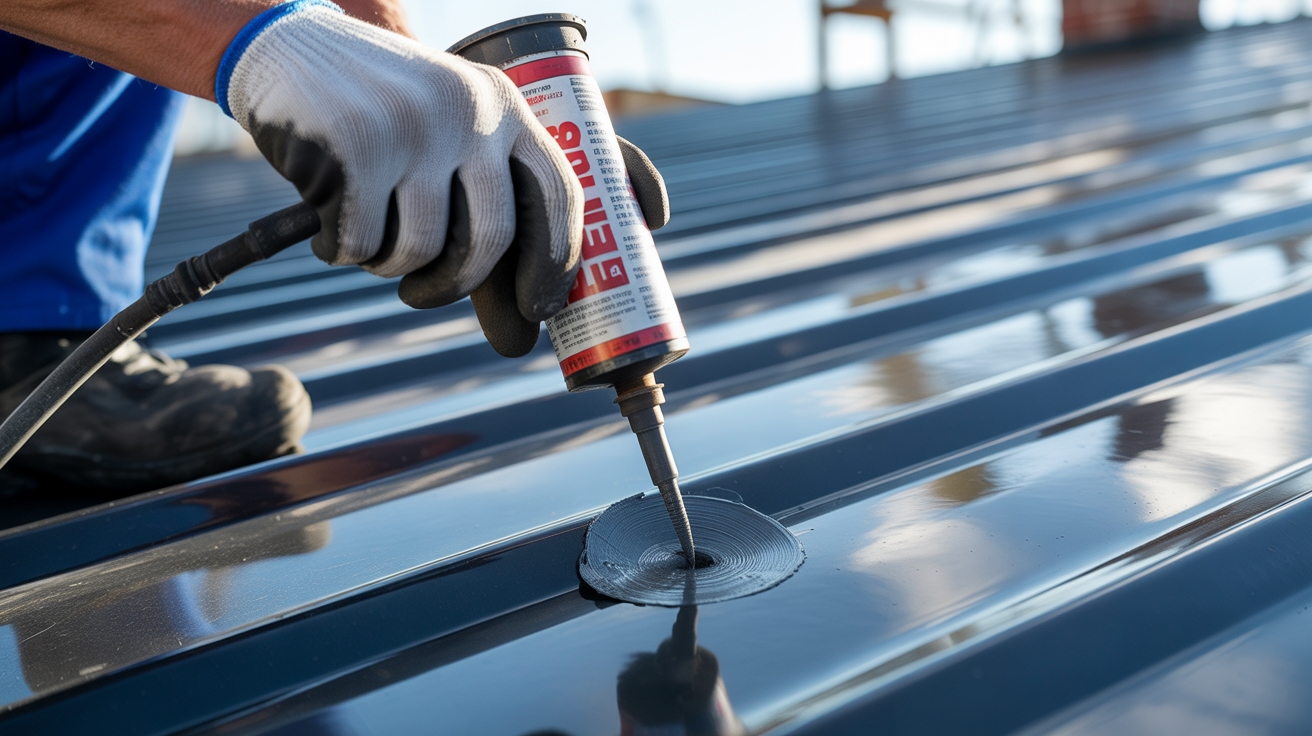
You need specific tools and materials to complete proper metal roof patching. The right supplies ensure your roof hole repair lasts for years without leaking.
Basic roof repair tools include a wire brush, sandpaper, and clean rags. You’ll also need a caulk gun for applying roof sealant. A utility knife helps prepare surfaces and cut patch materials when needed.
Safety Gear
Roofing is among the top five occupations for fatal work injuries in the U.S. according to Bureau of Labor Statistics; falls from roofs remain the leading cause of fatalities. Your safety gear must meet professional standards before you step onto any roof.
OSHA requires use of gloves, safety glasses, and fall protection equipment for metal roof work; this applies in Mississippi. Non-slip shoes provide essential traction on metal surfaces. A safety harness becomes necessary for steep roofs or high buildings.
Cleaning Supplies
Wire brushes remove rust and loose paint from damaged areas. Medium-grit sandpaper smooths rough edges around nail holes. These roof repair materials prepare surfaces for proper sealant adhesion.
You also need clean, dry rags to wipe away debris. Acetone or denatured alcohol helps remove oil and stubborn dirt. Clean surfaces are essential for successful metal roof sealing.
Sealant
Mississippi State University Extension recommends using only sealants and fasteners rated for high humidity and salt exposure due to the coastal climate. Your choice of roof sealant directly impacts repair longevity. Silicone roof sealant works well for most small roof repairs.
Research has found polyurethane and butyl-based sealants provide the best long-term water resistance for metal roof repairs in high-rainfall, hurricane-prone regions. These sealants resist UV damage and temperature changes better than standard options. Metal roof coatings containing these compounds offer superior roof waterproofing.
Caulk Gun
A caulk gun allows precise sealant application into and around nail holes. This tool gives you control over how much roofing cement you dispense. Standard caulk guns fit most roof sealant tubes available at hardware stores.
Some sealants come in squeeze tubes for small repairs. However, a caulk gun reduces hand fatigue during larger metal roof restoration projects.
Optional for Larger Holes
Sheet metal pieces become necessary for roof puncture repair larger than a quarter. You can purchase pre-cut patches or use scrap metal matching your roof type. Galvanized roof repair and aluminum roof repair require compatible patch materials.
Metal roofing screws with rubber washers secure patches properly. A drill with the correct bit size makes fastener installation easier. Roof patch kits often include everything needed for metal panel repair in one package.
How Do You Prepare Safely for Metal Roof Repair?
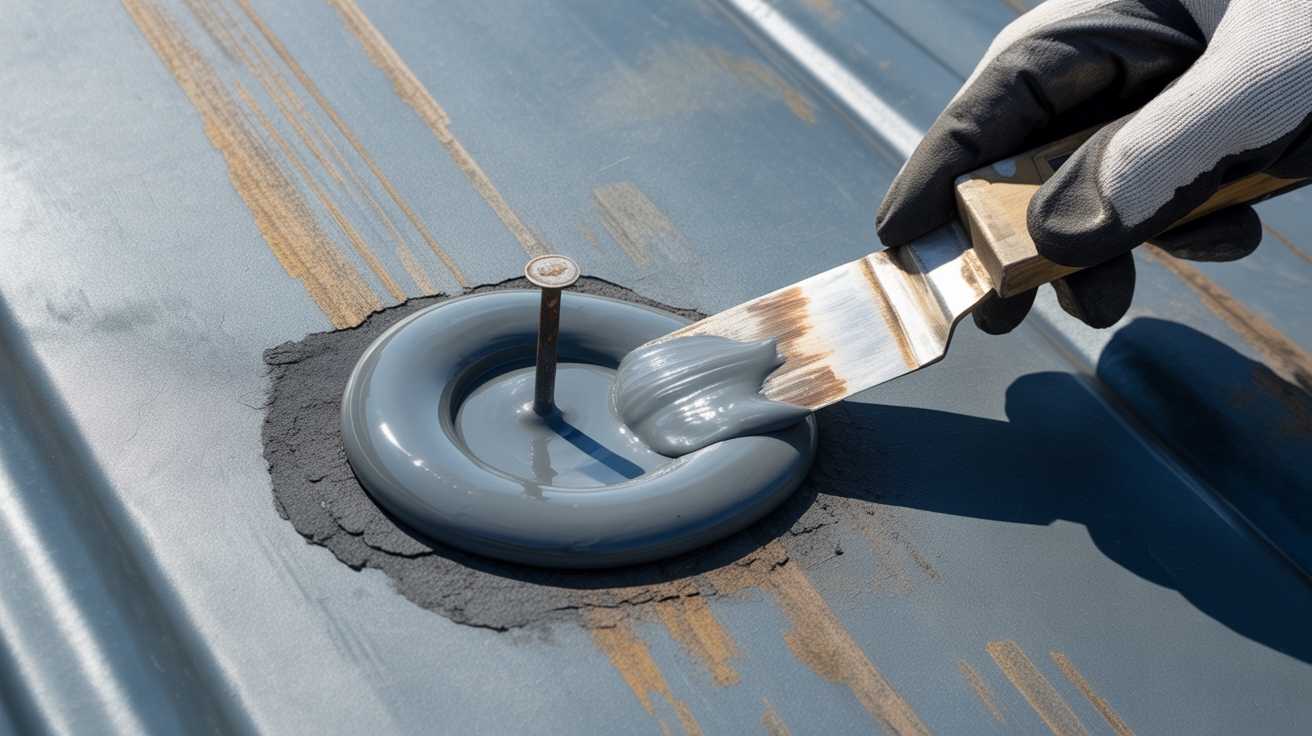
You must prioritize safety before attempting any DIY roof repair work. Metal roofs become slippery when wet and dangerously hot in direct sunlight.
Roofing is among the top five occupations for fatal work injuries in the U.S. according to Bureau of Labor Statistics. These statistics highlight why roof repair safety cannot be ignored. Professional preparation reduces accident risk significantly.
Prioritize Safety When Working on a Roof
Falls from roofs remain the leading cause of fatalities in the roofing industry. A stable ladder that extends three feet above the roof edge provides safe access. Someone should know you’re working on the roof in case emergency help becomes necessary.
Mississippi follows federal OSHA safety law for roofing; no special state-specific chapter, but public sector workers are covered under federal regulations. These standards apply to homeowners undertaking their own repairs as well. Weather damage repair should wait for calm, dry conditions.
Wear Gloves and Eye Protection
OSHA requires use of gloves, safety glasses, and fall protection equipment for metal roof work. Gloves protect your hands from sharp metal edges and chemical sealants. Safety glasses prevent debris from entering your eyes during cleaning and drilling.
Metal roof seam repair often involves working with sharp edges that can cause serious cuts. Heavy-duty work gloves provide the best protection during metal roof maintenance tasks.
Ensure the Roof Surface Is Dry
Wet metal roofs become extremely slippery and dangerous to walk on. You must wait at least 24 hours after rain before starting repairs. Moisture under sealant prevents proper adhesion and leads to failed repairs.
Morning dew can make roofs slippery even on sunny days. The best time for roof penetration repair is midday when surfaces are completely dry. Temperature also matters – sealants don’t cure properly below 50 degrees Fahrenheit.
Have Stable Footing
Non-slip shoes designed for roofing work provide better traction than regular footwear. You should step only on roof panel valleys or ribs, not the flat areas between. Metal roofs can dent under concentrated weight in certain spots.
A roof safety harness attached to a secure anchor point prevents falls on steep roofs. Walk slowly and deliberately, testing each step before transferring your full weight. Small roof repairs don’t justify taking big safety risks.
How Do You Locate and Clean Nail Holes?
You need to find all nail holes before beginning your fixing roof leaks project. Water can travel along metal panels before dripping inside, making the leak source hard to pinpoint.
Roof inspection from inside the attic often reveals holes as light spots during daytime. You can also trace water stains back to their source. Mark each hole’s location with chalk or tape before moving to the roof.
Identify the Nail Hole(s)
Old nail holes often have rust stains or discoloration around them. Look for raised areas where sealant was previously applied and failed. Previous temporary roof fix attempts may hide underneath newer problems.
FEMA reports after hurricanes have documented widespread metal roof damage along the Gulf Coast, including Gulfport. Storm damage creates multiple penetrations that need attention. A systematic grid search of your roof ensures no holes are missed.
Use a Wire Brush or Sandpaper
Wire brushes effectively remove rust and loose material around nail holes. You should work in circular motions, expanding outward from the hole. Metal roof fasteners that have rusted need complete cleaning for proper sealing.
Medium-grit sandpaper smooths the area after wire brushing. This step creates a clean surface for sealant adhesion. Corrugated metal repair requires extra attention in the valleys where water collects.
Remove Rust, Dirt, and Loose Paint
Rust prevention starts with thorough removal of existing corrosion. Any loose paint must be scraped away completely. Sealant won’t bond to dirty or rusty surfaces, leading to future leaks.
Always check for and abate lead paint if the metal roof is pre-1978; EPA federal law applies to Mississippi renovations involving painted surfaces. This safety step protects you and your family. Professional testing determines whether special precautions are necessary.
Wipe the Area Clean With a Dry Rag
A clean, dry rag removes all dust and debris after scrubbing. Some repairs benefit from wiping with acetone or alcohol for extra cleanliness. The surface must be completely dry before applying any roof sealant.
Moisture trapped under sealant causes adhesion failure and continued leaks. You should wait several hours after cleaning if the weather is humid. Steel roof repair demands patience during preparation steps.
How Do You Repair Small Nail Holes in Metal Roofs?
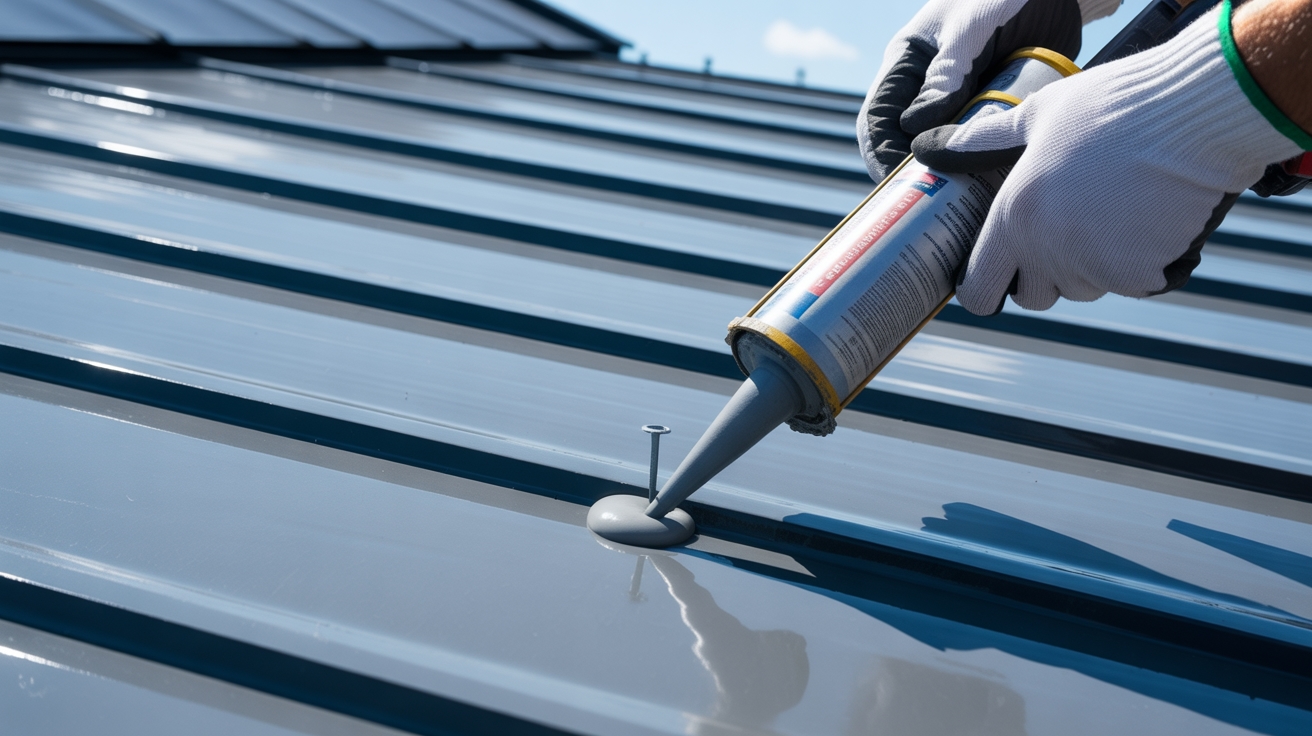
You can fix small nail holes with sealant alone when holes are smaller than a quarter. This method provides effective roof waterproofing for minor punctures. Proper application techniques ensure long-lasting results.
Research has found polyurethane and butyl-based sealants provide the best long-term water resistance for metal roof repairs. These products outperform standard silicone in harsh weather conditions. Your climate determines which roof repair materials work best.
Apply Sealant Directly Into and Over the Hole
Your caulk gun tip should go directly into the nail hole when possible. You need to fill the hole completely from bottom to top. Roof sealant must penetrate fully for effective sealing.
Some professionals prefer roof repair tape for tiny holes, but sealant provides superior protection. Roofing cement creates a waterproof barrier when applied correctly. Mississippi State University Extension recommends using only sealants rated for high humidity and salt exposure.
Spread the Sealant Around the Immediate Area
You should cover at least one inch of surface area around each hole. A putty knife or gloved finger spreads sealant smoothly and evenly. The sealant layer should be thick enough to create a watertight seal.
Metal roof flashing techniques apply here – overlap and full coverage prevent water intrusion. Your sealant application should feather out at the edges. This technique prevents water from pooling against raised sealant edges.
Allow the Sealant to Cure Completely
Manufacturer instructions specify exact curing times for different products. Most roof sealants need 24 to 48 hours before exposure to water. Temperature and humidity affect how quickly sealants cure.
You shouldn’t test the repair by spraying water until curing completes. Premature water exposure causes sealant failure and wasted effort. Metal roof preserving requires patience during the curing process.
How Do You Repair Larger Holes in Metal Roofs?
You need metal patches for holes larger than a quarter inch. This sheet metal repair technique provides structural integrity that sealant alone cannot offer. Proper patching prevents metal panel repair problems from worsening.
FEMA reports after hurricanes have documented widespread metal roof damage along the Gulf Coast. Major storms create punctures requiring more than simple sealant applications. Improper repairs and unsealed holes are cited as major moisture intrusion causes.
Cut the Patch
Your patch should extend at least two inches beyond the damaged area in all directions. Metal patches must match your roof material – galvanized steel, aluminum, or other types. Sheet metal shears cut patches cleanly without creating sharp burrs.
The patch shape should follow roof panel contours for proper fit. Corrugated metal repair requires patches that match the wave pattern. You can purchase pre-formed patches at roofing supply stores.
Apply Sealant
You must apply a generous layer of roof sealant to the cleaned area before placing the patch. Sealant goes on both the roof surface and the patch underside. This double application ensures complete waterproofing roof protection.
Butyl-based sealants work exceptionally well for large metal roof restoration projects. Research has found polyurethane and butyl-based sealants provide the best long-term water resistance. Your sealant layer should be thick enough to fill any gaps.
Place the Patch
You need to position the patch carefully over the hole before pressing down. The patch must align with roof panel ridges and valleys. Press firmly to squeeze out excess sealant and eliminate air pockets.
Some sealant should squeeze out around all patch edges. This overflow indicates proper coverage underneath the patch. You can smooth excess sealant with a putty knife.
Secure the Patch
Metal roofing screws with rubber washers fasten patches permanently. You should place screws every two to three inches around the patch perimeter. Screws must penetrate roof decking or structural supports beneath the metal.
In Gulfport, building permits may be required for substantial structural metal roof repairs. Large patches may trigger permitting requirements. Consult the local permitting office to avoid code violations before extensive work.
Finish
You need to apply additional sealant over all screw heads and patch edges. This final sealing step prevents water from entering through fastener holes. The finished repair should create a smooth, watertight surface.
Metal roof coatings can be applied over patches for uniform appearance. Some homeowners paint patches to match existing roof color. For insurance claims, repairs must meet manufacturer’s and code standards or claims may be denied.
How Do You Fix Loose or Old Fasteners?
You often find that leaks come from loose fasteners rather than nail holes. Metal roof fasteners can work loose over time due to thermal expansion and contraction. This roof maintenance tips section addresses fastener problems.
Weather damage repair frequently involves tightening or replacing old screws. Rubber washers deteriorate with age and sun exposure. Failed washers allow water to leak past otherwise good fasteners.
Remove the Old Nail
You should use a pry bar or nail puller to extract old nails carefully. The surrounding metal must not be damaged during removal. Old fasteners often have rusted in place and resist extraction.
Some situations require drilling out stubborn old nails. A drill bit slightly larger than the nail shaft works best. You need to avoid enlarging the hole unnecessarily during this process.
Replace With a New Metal Roofing Screw
New roofing screws with neoprene washers provide better sealing than old nails. Mississippi State University Extension recommends using fasteners rated for high humidity and salt exposure. Screws hold more securely than nails in metal roofing applications.
Your new screws should be long enough to penetrate roof decking by at least one inch. Self-tapping screws don’t require pre-drilling in most metal roofs. The rubber washer must compress slightly when the screw is tight.
Apply Sealant Around the Hole Before Driving the New Screw
You need to inject roof sealant into the old nail hole before installing new screws. This extra step prevents water from following the fastener into your home. Sealant should fill the hole completely.
Some professionals apply sealant to screw threads before driving them. This technique creates a barrier inside the hole. The rubber washer and sealant combination provides double protection against roof leak repair problems.
What Causes Nail Holes to Leak in Metal Roofs?
Nail holes leak when fasteners are removed without proper sealing afterward. Old repairs sometimes involve removing and relocating fasteners. Each unsealed hole becomes a water entry point.
FEMA reports have documented widespread metal roof damage along the Gulf Coast. Storm damage often pulls fasteners partially out of roofs. Improper repairs and unsealed holes are cited as major moisture intrusion causes after hurricanes.
Thermal expansion and contraction can enlarge holes around fasteners over time. Metal roofs expand when hot and contract when cold. This movement gradually loosens fasteners and enlarges penetrations.
Rust around old nail holes compromises the seal between fastener and metal. Corroded metal no longer provides a smooth surface for washers. Water finds pathways through microscopic gaps that rust creates.
Poor initial installation leaves some fasteners without proper sealing. Contractors sometimes skip sealant application to save time and money. These shortcuts create immediate vulnerability to fixing roof leaks problems.
Can You Prevent Future Nail Hole Damage on Metal Roofs?
You can minimize future nail hole problems through proper metal roof maintenance practices. Regular roof inspection identifies small issues before they become expensive repairs. Prevention saves money compared to emergency roof repair costs.
Mississippi State University Extension recommends using only sealants and fasteners rated for high humidity and salt exposure. Quality materials resist weather damage repair needs longer than cheap alternatives. Your initial investment in proper materials pays off over decades.
Roof coatings applied every few years protect metal surfaces from rust and deterioration. These metal roof coatings seal minor imperfections and extend roof lifespan. Many coatings include rust prevention compounds that protect existing fasteners.
You should inspect your roof twice yearly for loose fasteners and damaged sealant. Spring and fall inspections catch problems before severe weather arrives. Tightening loose screws during routine checks prevents water intrusion.
Professional roof inspection services identify problems homeowners often miss. Experts spot early signs of metal roof seam repair needs and fastener issues. Annual professional inspections cost less than major roof damage fix projects.
Proper attic ventilation reduces condensation that accelerates metal roof deterioration. Moisture from inside your home can rust metal from underneath. Good ventilation protects both your roof and home structure.
When Should You Replace Screws Versus Using Sealant Only?
You need to replace screws when fasteners are loose, missing, or severely rusted. Tightening alone won’t fix screws that have stripped holes or damaged threads. New metal roofing screws provide secure attachment that sealant cannot replace.
Sealant alone works for small holes where no structural fastening is needed. Nail holes from removed satellite dishes or antennas don’t require new screws. Simple roof hole patching with quality sealant suffices for these situations.
You should replace screws when rubber washers have deteriorated or cracked. Old washers no longer seal properly even when screws seem tight. Mississippi State University Extension recommends fasteners rated for high humidity and salt exposure for long-term performance.
Combination repairs use both new screws and sealant for maximum protection. This approach provides mechanical attachment plus chemical sealing. Metal panel repair on structural penetrations always requires proper fasteners with sealant backup.
For insurance claims, repairs must meet manufacturer’s and code standards. Many roofing warranties require specific fastener types and installation methods. Sealant-only repairs may void warranties or fail inspection requirements.
Professional roof repair services can assess whether screws or sealant provides adequate protection. Their experience with local climate conditions guides material selection. Research has found polyurethane and butyl-based sealants provide the best long-term water resistance when combined with proper fasteners.
What Type of Sealant Works Best for Metal Roof Repairs?
Research has found polyurethane and butyl-based sealants provide the best long-term water resistance for metal roof repairs in high-rainfall, hurricane-prone regions. These professional-grade products outperform standard options in demanding climates. Your sealant choice dramatically affects repair longevity.
Mississippi State University Extension recommends using only sealants and fasteners rated for high humidity and salt exposure due to the coastal climate. Coastal areas face unique challenges that require specialized roof repair materials. Salt air and moisture accelerate deterioration of inferior products.
Silicone roof sealant offers excellent UV resistance and flexibility across temperature ranges. This sealant type adheres well to most metal roof surfaces. Silicone maintains elasticity for years without cracking or peeling.
Polyurethane sealants provide superior adhesion and durability in harsh conditions. These products resist mildew growth better than other options. Polyurethane creates a tough, paintable surface after curing.
Butyl rubber sealants excel at filling gaps and providing long-lasting waterproofing roof protection. This material remains flexible in extreme temperatures. Butyl-based products are often recommended for metal roof flashing applications.
Roofing cement in caulk-tube form works well for small repairs and emergency fixes. These products provide quick temporary roof fix solutions. However, specialized metal roof sealants outperform general roofing cement for permanent repairs.
You should avoid sealants not rated for metal-to-metal applications. Some products designed for wood or asphalt roofs fail on metal surfaces. Always check manufacturer specifications before purchasing roof repair materials.
Need Professional Metal Roof Repair Services in Mississippi With BSL Roofing?
BSL Roofing provides expert metal roof repair and metal roof replacement services throughout Mississippi’s Gulf Coast region. We are trusted roofing contractors in Mississippi with decades of combined experience. Our team understands the unique challenges that coastal weather creates for metal roofs.
Professional roof repair from BSL Roofing ensures your repairs meet all code requirements and warranty standards. In Gulfport, building permits may be required for substantial structural metal roof repairs. We handle all permitting and inspection requirements for you. For insurance claims, repairs must meet manufacturer’s and code standards or claims may be denied – we document everything properly.
Our service area includes Ocean Springs, Long Beach, Pass Christian, Biloxi and other popular areas throughout the region. We also serve Waveland, Slidell, Picayune, and surrounding communities. Coastal residents from Pascagoula to Diamondhead trust BSL Roofing for quality workmanship.
You deserve metal roof maintenance from professionals who understand Gulf Coast conditions. Our crews use only materials rated for high humidity and salt exposure. We follow all OSHA safety protocols to protect our workers and your property. Contact BSL Roofing today for a free inspection and estimate on your metal roof repair needs.